Art from the Soldier by Pamela Wilde has such a beautiful mission behind it that I’d like to give you an update of a previous post . The time is nearing and here are more details about it’s September 2024 Opening Exhibition.
More than fifteen visual artists stopped by the weekly gathering yesterday on May Day, to say, “Hey, take a look at my new painting!” It was a great day to be outside. The sun was shining and there was a gentle, moderately warm breeze which swept across the lawns and portico at the historic Palladian Mansion, “The Liriodendron.”
The art talk was as interesting as always, with creatives sharing their methodology and their visions about what they brought to various surfaces. The exchange of questions led to insight about their individual style preferences, favored art supplies and so much more, such as when their paintings will make their debuts in future local, statewide and regional shows or beyond. Thus, I restrain from posting photos of individual works of art, most of which were very colorful.
It was so good to be among these artists once again. The only disappointment was although the wisteria overhead was still dripping with flowers, their purple shades of color have faded to mostly shades of gray to white. Then watch out! It is known to become wild, carefree and unruly. The new shoots of green will quickly wind and twine along along anything they can grab onto and hug.
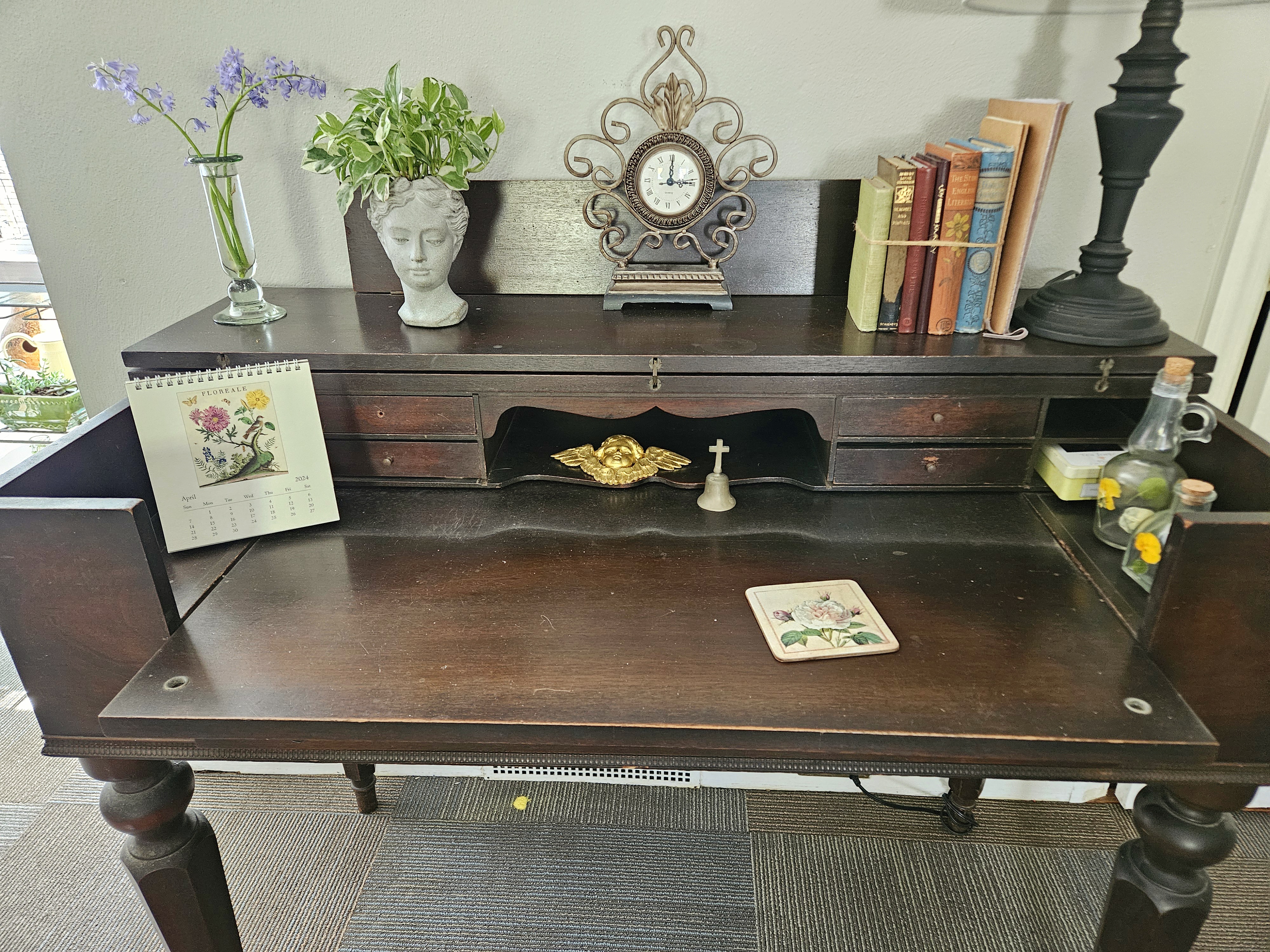
Good Morning from my Grandmother’s 1920’s Spinet Writing Desk. I inherited it, but unfortunately, I didn’t inherit the story behind it. Why? Sadly, I didn’t ask. My grandmother was born in January 1900 and married in the early 1920’s, so I can only surmise it was given to my grandparents as a wedding present. She enjoyed it all ninety-nine and one-half years until her passing.
It was only recently, after having moved it, I was able to get the writing surface to slide out. A drawer knob or two are missing but, she is solid as a rock, with her shapely legs. Not bad for an ole girl who is 100 years of age. I meant to clean her up before taking this photo, but then I forgot. Oh well, her imperfections give her character and in my opinion, a rich patina adds to her value and it is better than being all polished up.
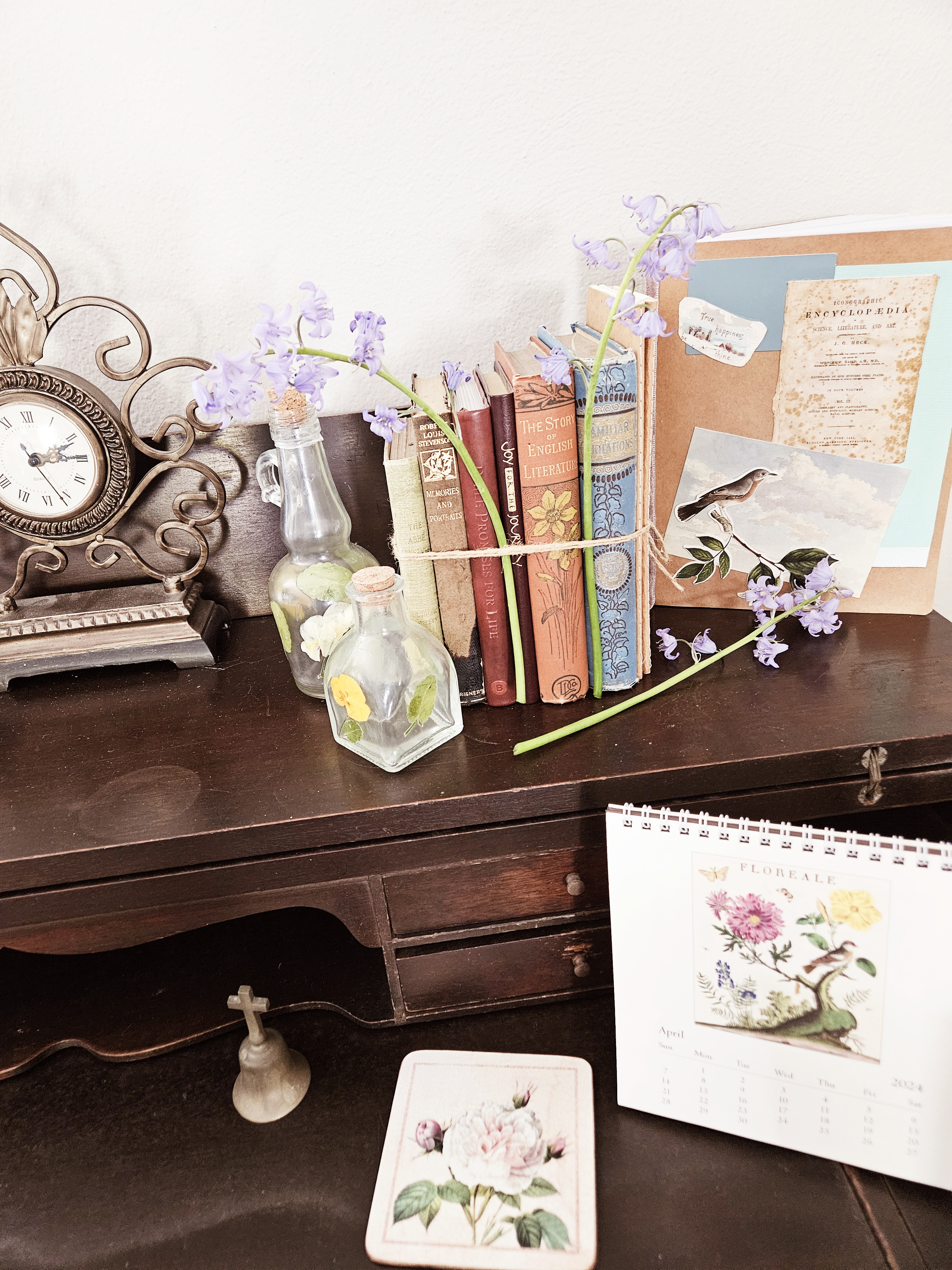
Every antique and painting has a provenance or story behind it. So next time you are wandering an art gallery or museum and the artist happens to be in attendance, don’t forget to ask about the painting, sculpture, mixed-media piece that you find enchanting, enthralling, exhilarating, captivating or controversial. Backstories are what allows us see fragments of an artist’s soul. Every item that sits on my antique writing desk has a short story, too, including the “Mona” lavender clivia which I foraged from an old abandoned lot yesterday.
Watercolor is a medium which I’ve always considered a “wild child.” It wanders where it wants to go and easily gets puddled up in messes. From my own experience of just “dabbling and splashing about” with watercolors, its a very hard medium to tame. Thanks to artist, Frank Spino who was graciously giving of his time and explanation, he shared a few tips he uses to get the results he wants. I understand a little more of how he keeps control on a paint medium that strays and meanders. Using his easel set up with a work-in-progress, he talked with me about his process, which was so informative.
My meeting Frank Spino came last Sunday, when I went to an art exhibit he’d curated. He and four more watercolorists -Kathleen Maling, Joanna Barnum, Matthew Bird, Janet Means Belich “Five Voices in Watercolor,” was exhibited at the Gallery 220 in Havre de Grace, Maryland. All equally talented having earned what many might call “elite status” in the world of watercolor painting. Their work has been juried in to the prestigious American Watercolor (AWS) International Exhibition and many have been featured in top-notch art magazines.
Each one of the artists is set apart stylistically by what they bring to the paper. Frank Spino wowed me with the high level of color saturation he has been able to achieve through a very watery medium. A transplant from Florida, you can see where the interest in the citrus subject matter came from. His work is by no means limited to fruit.
As with former Floridian, Kathleen Maling, whose interest often lies in painting very large scale reptiles, such as lizards and crocodiles, alligators and Komodo dragons. Gigantic creatures! But that is not all! Her watercolor “Egret,” shows her adeptness at painting shorebirds.
Matthew Bird‘s work has a special softness to some of his figurative work, which upon my first introduction to him seems to be in-line with his demeanor. “Stopping by the Woods” and “Angel of Music,” as well as his classical still life paintings had me doing a triple-take, as I thought they were oil paintings.
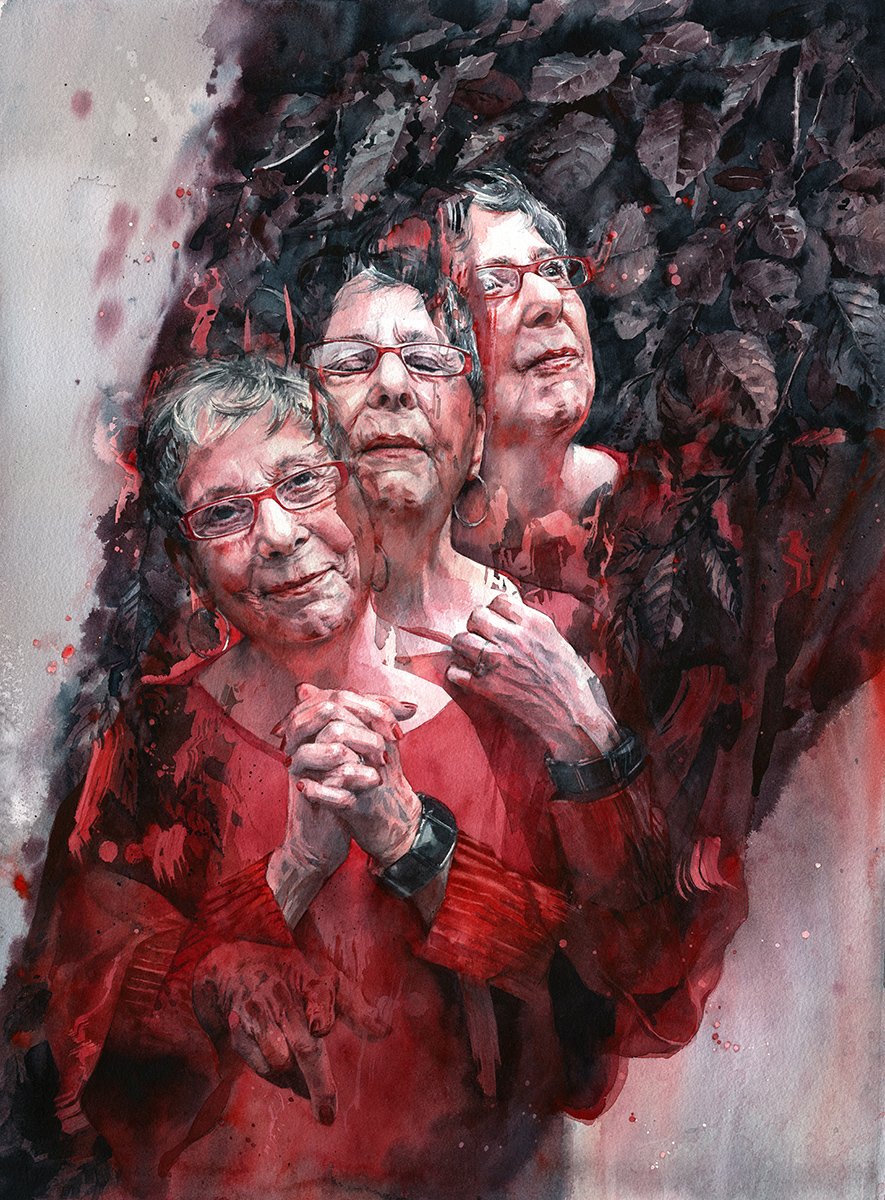
“The Poet is a Funnel” by Joanna Barnum brought to the viewer a very emotive piece, depicting the face of Grace Cavalieri who was the tenth Poet Laureate of Maryland. It shows the poetess in three poses whereby her deep feelings for perhaps what she was writing or feeling about poetry she read are on full display. Grace has obviously been very moved. As you can see in much of Joanna Barnum‘s work on her website, it is affective, imaginative and powerful.
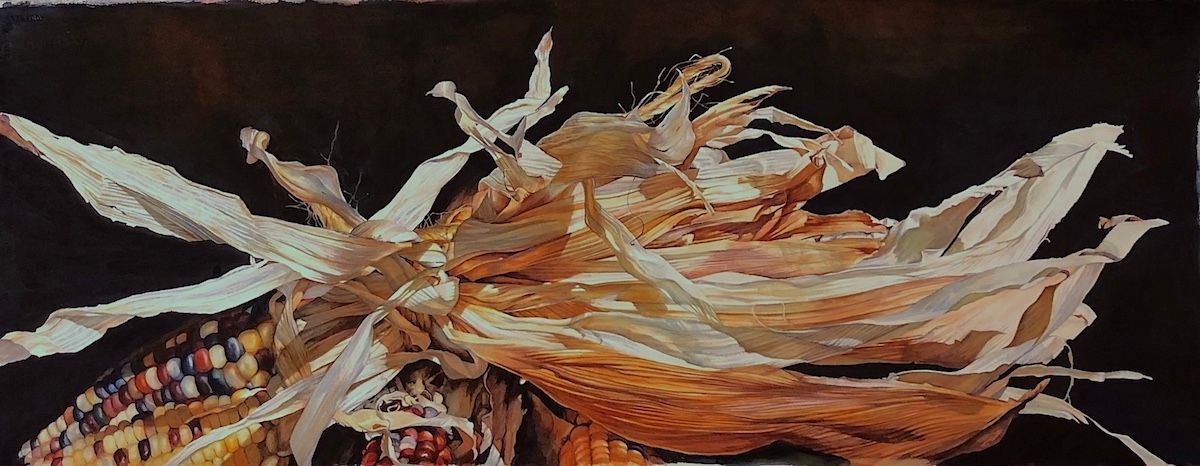
Last, but certainly not least, the Indian corn, leaf paintings and the Amish and simple life paintings brought to the exhibit by Janet Means Belich, were all synchronistic down-to-earth images. Much of what can be seen in her images are found in the fields and destinations in this partly rural county and in nearby Lancaster County, Pennsylvania.
Photo by Sue Leonard:
Back row – Artists Frank Spino (l) and Matthew Bird (r),
Front row – Johanna Barnum(l), Janet Means Belich (c), Kathleen Maling (r)
“Five Voices in Watercolor” was a spectacular exhibit. I enjoyed the art, speaking with each of the artists and taking in the “art vibe” once again in Havre de Grace, MD.
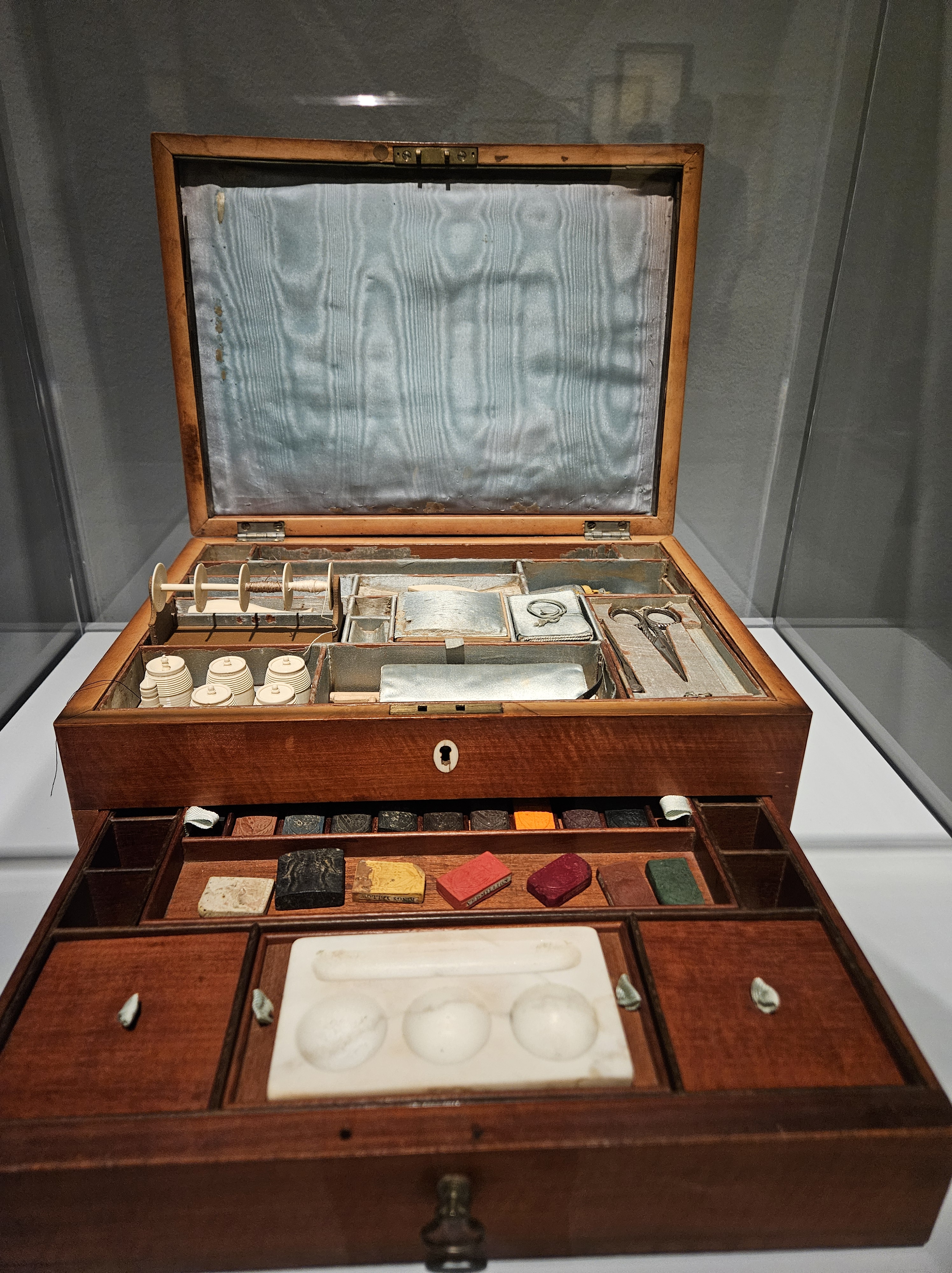
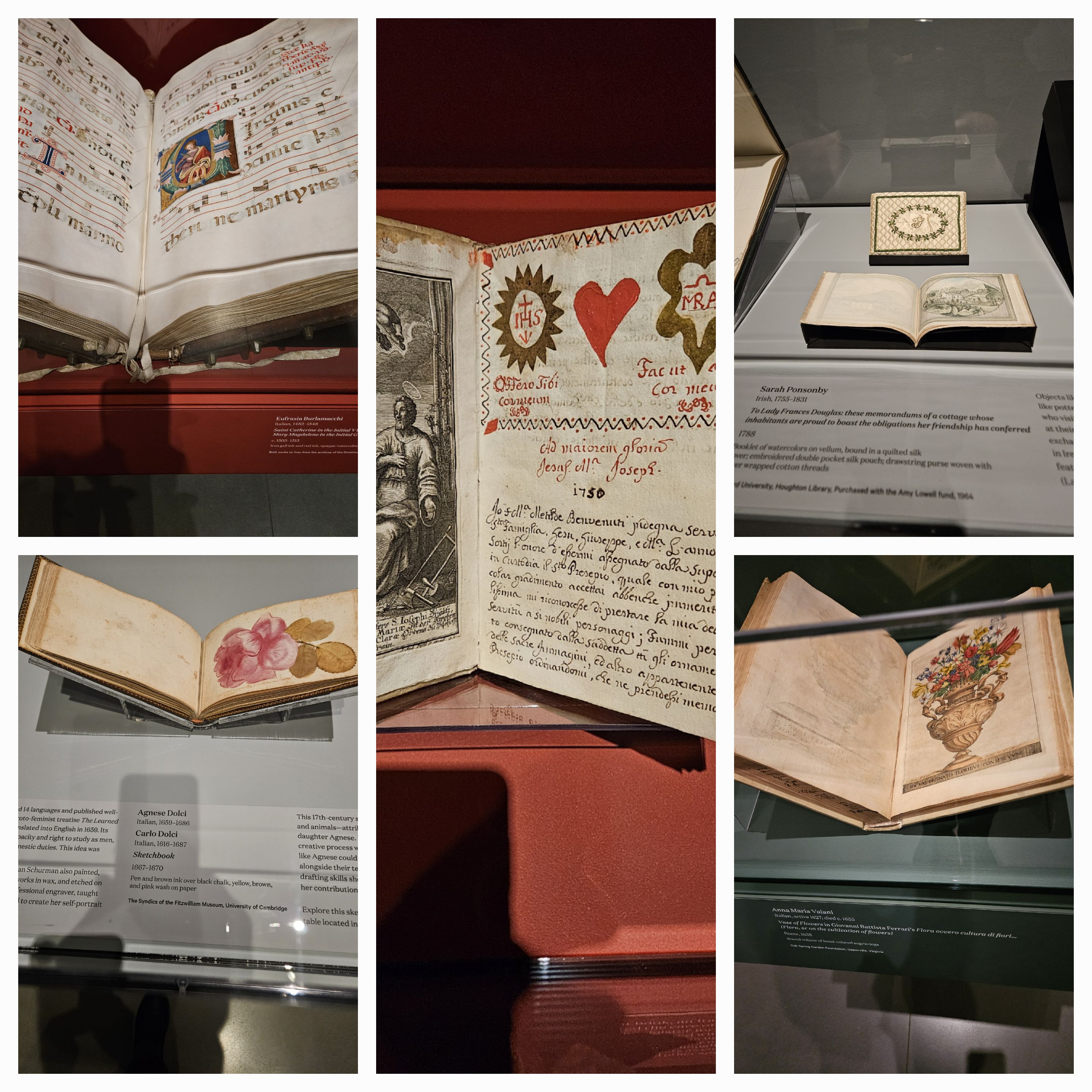
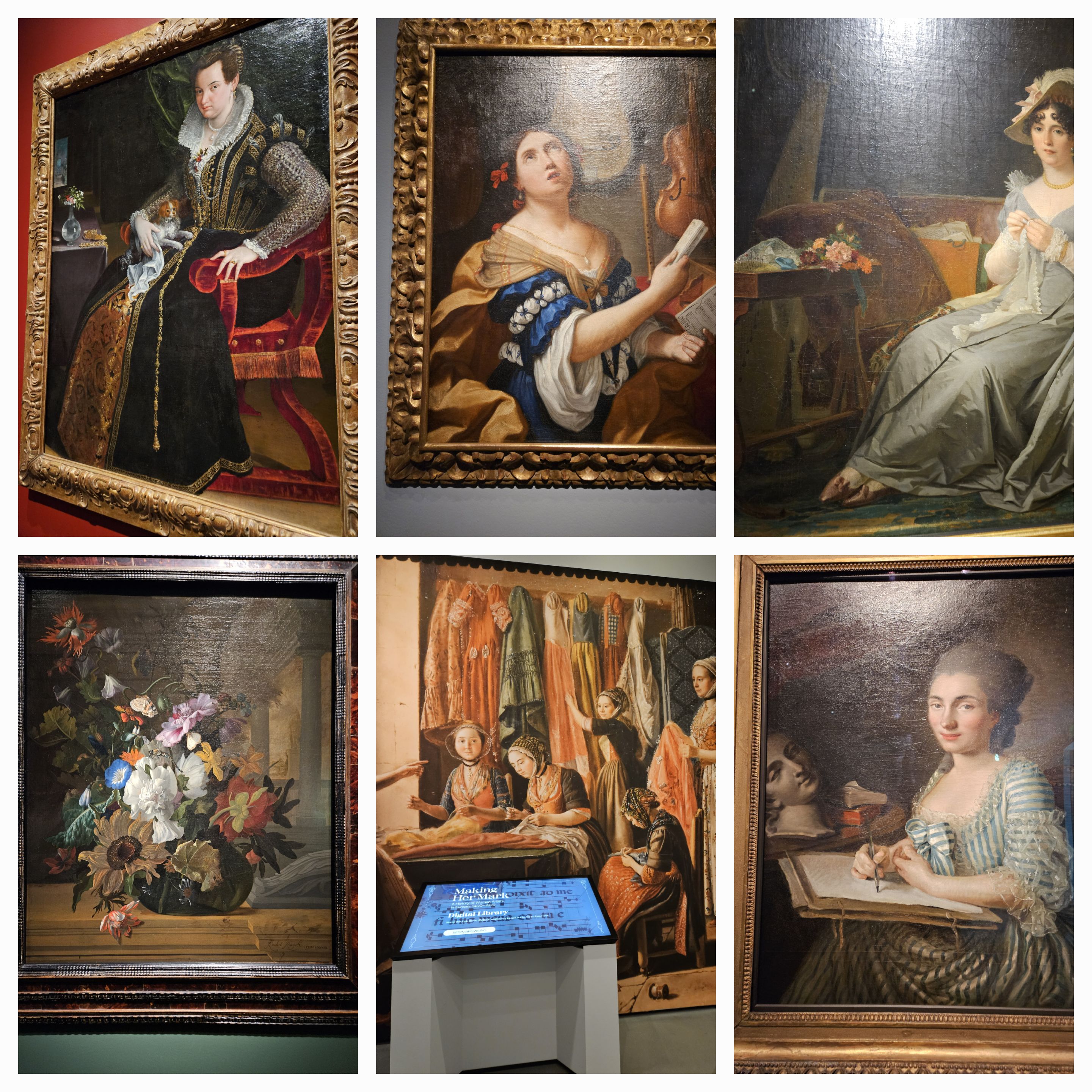
One of my most read blogs ever was about “A Single Thread,” a narrative written by Tracy Chevalier. As I walked through an exhibit at the Baltimore Museum of Art about ten days before Christmas, I was taken back to the historical fiction book of Chevalier.
Making Her Mark is an exhibit about Women European Artists who lived from 1400 to 1800. They lived long before the era of “surplus women,” written about by Chevalier, who were primarily women widowed by war and worked for the church. All women of the era (1400 – 1800) were schooled and trained in the “domestics” and many were greatly revered in Europe for their skills which “perpetuated and conveyed power” for the Catholic Church, the nobility and for the elite.
A sewing and watercolor paint box displayed in the exhibit was highly useful for those who were multi-talented.
Other women were papermakers, print makers, painted decorative items and made silver wares, sculpture and other iconic religious items to decorate the church.
Others were book makers.
Many were visual artists whose art, hundreds of years later, are in the top art museum collections around the world.
Tapestry to make robes, drapery, kneelers and other upholstery for the holiest and lace makers were among them.
Others studied and drew botanicals many of which were often written about or mentioned in the Bible, such as the mustard seed, myrrh, hyssop, cedar, lilies and roses.
Artists, is there any form of art in which you feel you really excel? Do you focus solely on what your soul beats the strongest for?
For more information on this exquisite exhibit, visit the BMA website. The exhibit will remain hanging until January 7, 2024.
Have you ever really paused and thought deeply about the miracle of life? During December it is a good time to reflect on what all the fuss of Christmas is really all about.
Many people think of artists as being eccentric people, however, the preconceived notion comes simply because creatives think outside the box and come up with some profound and inspirational ideas, words, images, sounds and tactile objects.
Pablo Casals once said, “A child must know that he is a miracle, that since the beginning of the world there hasn’t been, and until the end of the world there will not be, another child like him.”
This quote could not be more appropriate during the Christmas holidays and it reminds us to celebrate individuality and the creative spirit that each one of us is given by our Creator.
Just a few ounces of trivia today, and then we will get to the point of this post. Did you know in the 1770s and 1780s pouring a little tea in the saucer was common culture? It gave the teetotaler a little something to sip while the rest of the tea in the cup cooled a bit.
This poem written by James Dean and published by Lamb Lover Music/BMI struck my heartstrings and it speaks to the nip of trivia. It is a song of praise and thanksgiving – which is what November is all about.
Drinking from My Saucer (verse 1) written by Jimmy Dean and Published by Lamb Lover Music/BMI .
I’ve never made a fortune; I guess it’s too late now Oh but I don’t worry about that none cause I’m happy anyhow As I go along life’s journey, I’m reaping better than I sow I’m drinking from my saucer, cause my cup has overflowed.
Yes, I’ll keep drinking from my saucer, Lord, cause my cup has overflowed My cup has overflowed ~ Jimmy Dean
I’d like to take this opportunity to say how grateful I am for those who follow this website. Many of whom have been returning for more than a decade. What connects me with my community of readers across the broad branches of the humanities, is we all seek to manifest a satisfying life by digging a little deeper into the blessings that art, culture and spirituality bring to our existence.
This month, I’m looking forward to taking an art excursion to see a special exhibit at one of the top art museums in the city of Baltimore. I will share it with you right after Thanksgiving, right here on AllThingsFulfilling.com.
“Libraries store the energy that fuels the imagination.” ~ Sidney Sheldon
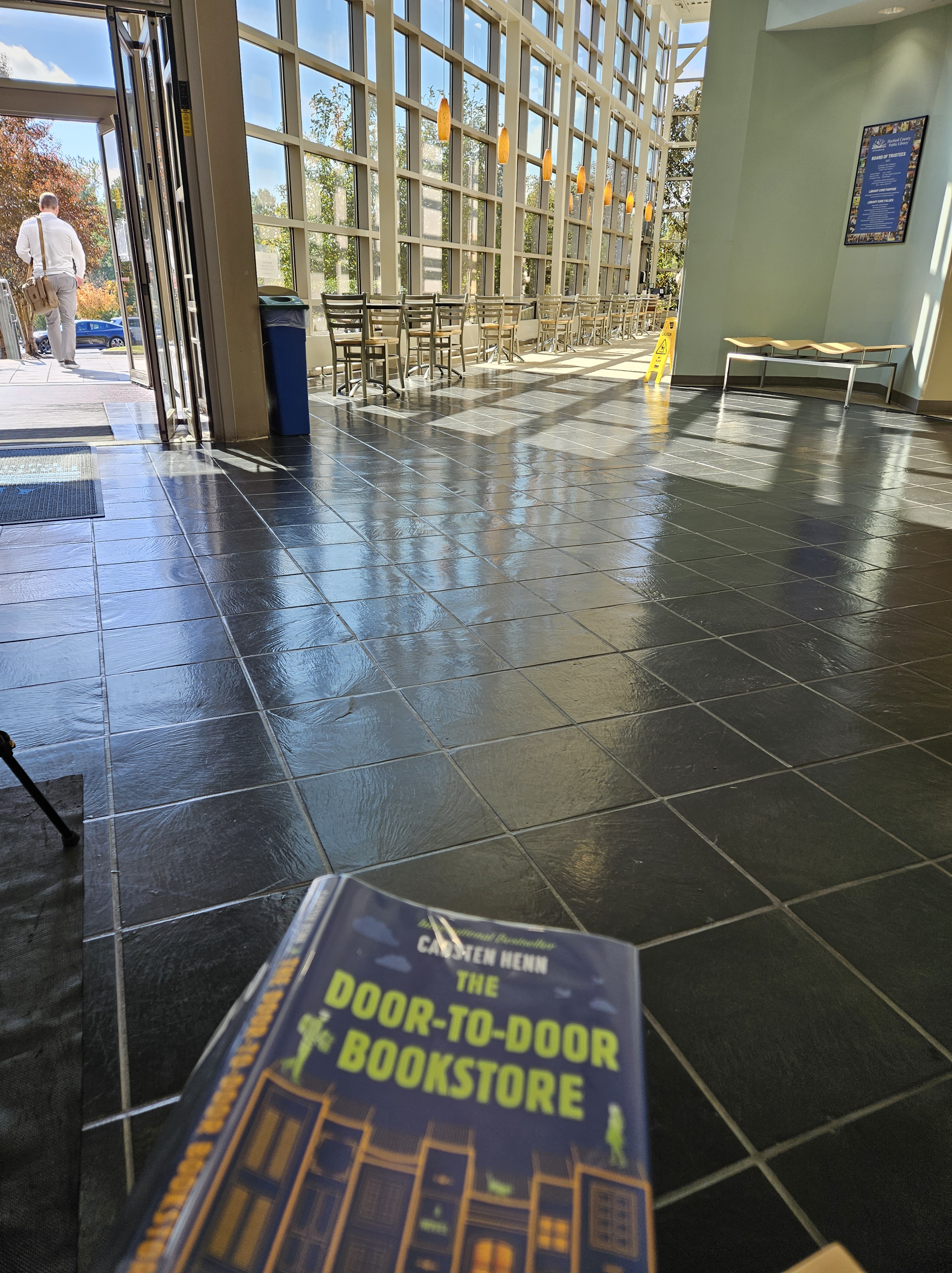
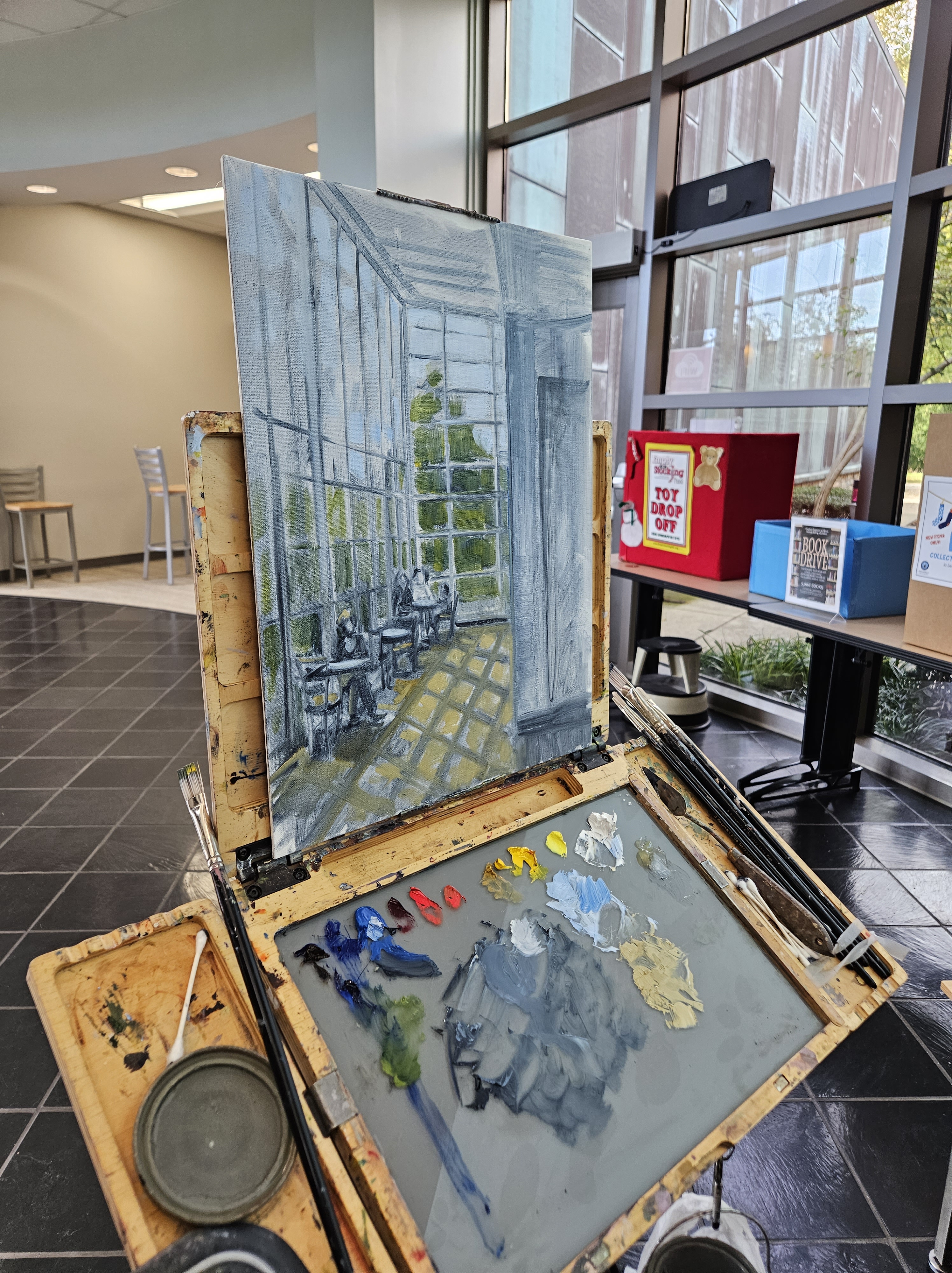
Yesterday in search of a publication, I went to the Abington Branch of the Harford County Public Library where I found my own next perfect story for All Things Fulfilling.
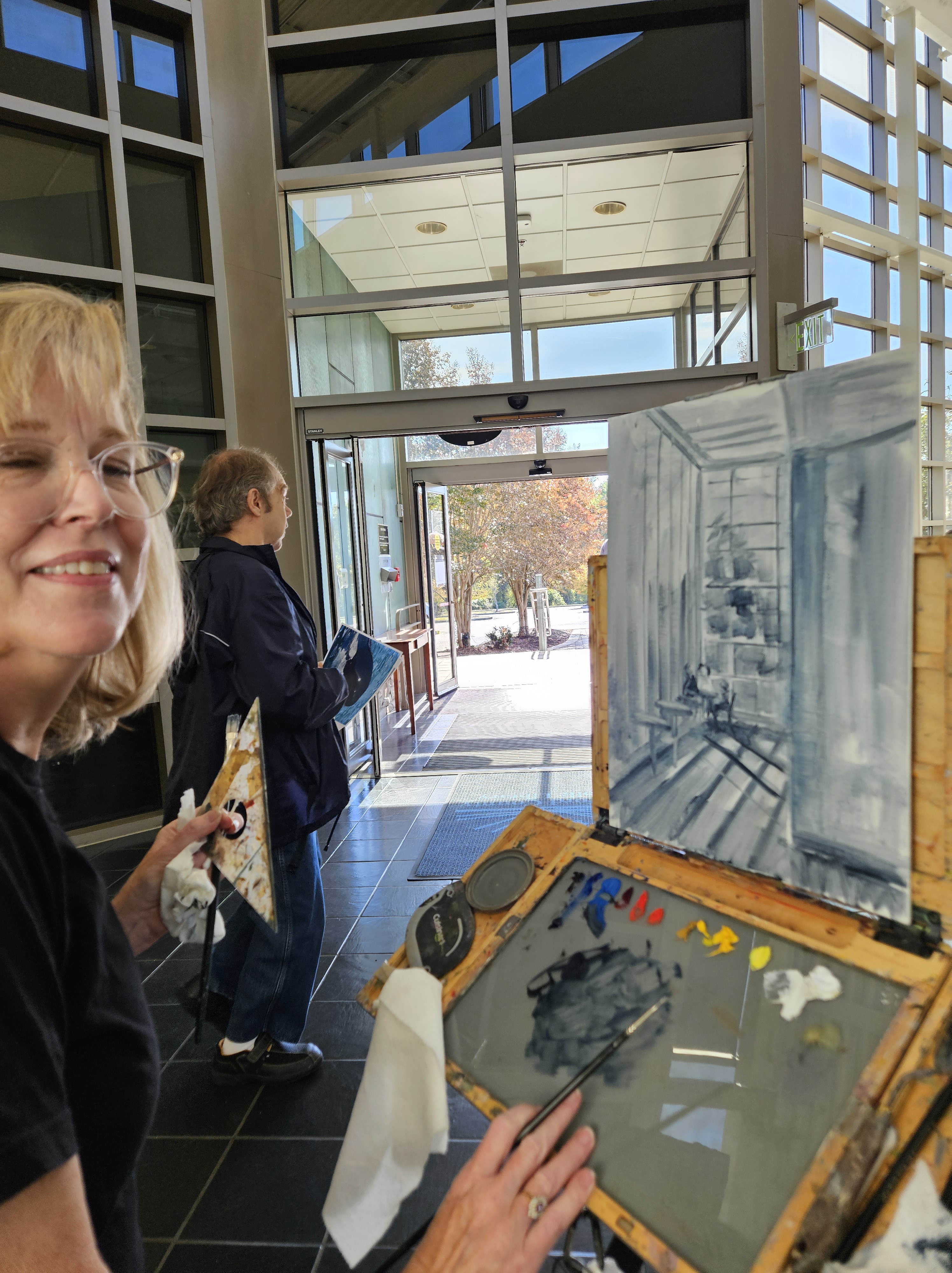
Here is the preface: “Literary Artist Meets Visual Artist facing editing challenge. Which lines are significant to the story and which are not?
Artist at work – Pamela Wilde. Her interpretation of narrative art uses paint and brush.
Conclusion to the story: Cross-connection between art disciplines fuels creative energy. Inspiration can be found right around the corner.
Note to our followers: Someday you may see the full finished story. It is yet to be determined!













 All Things Fulfilling