More than fifteen visual artists stopped by the weekly gathering yesterday on May Day, to say, “Hey, take a look at my new painting!” It was a great day to be outside. The sun was shining and there was a gentle, moderately warm breeze which swept across the lawns and portico at the historic Palladian Mansion, “The Liriodendron.”
The art talk was as interesting as always, with creatives sharing their methodology and their visions about what they brought to various surfaces. The exchange of questions led to insight about their individual style preferences, favored art supplies and so much more, such as when their paintings will make their debuts in future local, statewide and regional shows or beyond. Thus, I restrain from posting photos of individual works of art, most of which were very colorful.
It was so good to be among these artists once again. The only disappointment was although the wisteria overhead was still dripping with flowers, their purple shades of color have faded to mostly shades of gray to white. Then watch out! It is known to become wild, carefree and unruly. The new shoots of green will quickly wind and twine along along anything they can grab onto and hug.
The small town is passing. It was the incubator that hatched all our big men… ~ Will Rogers
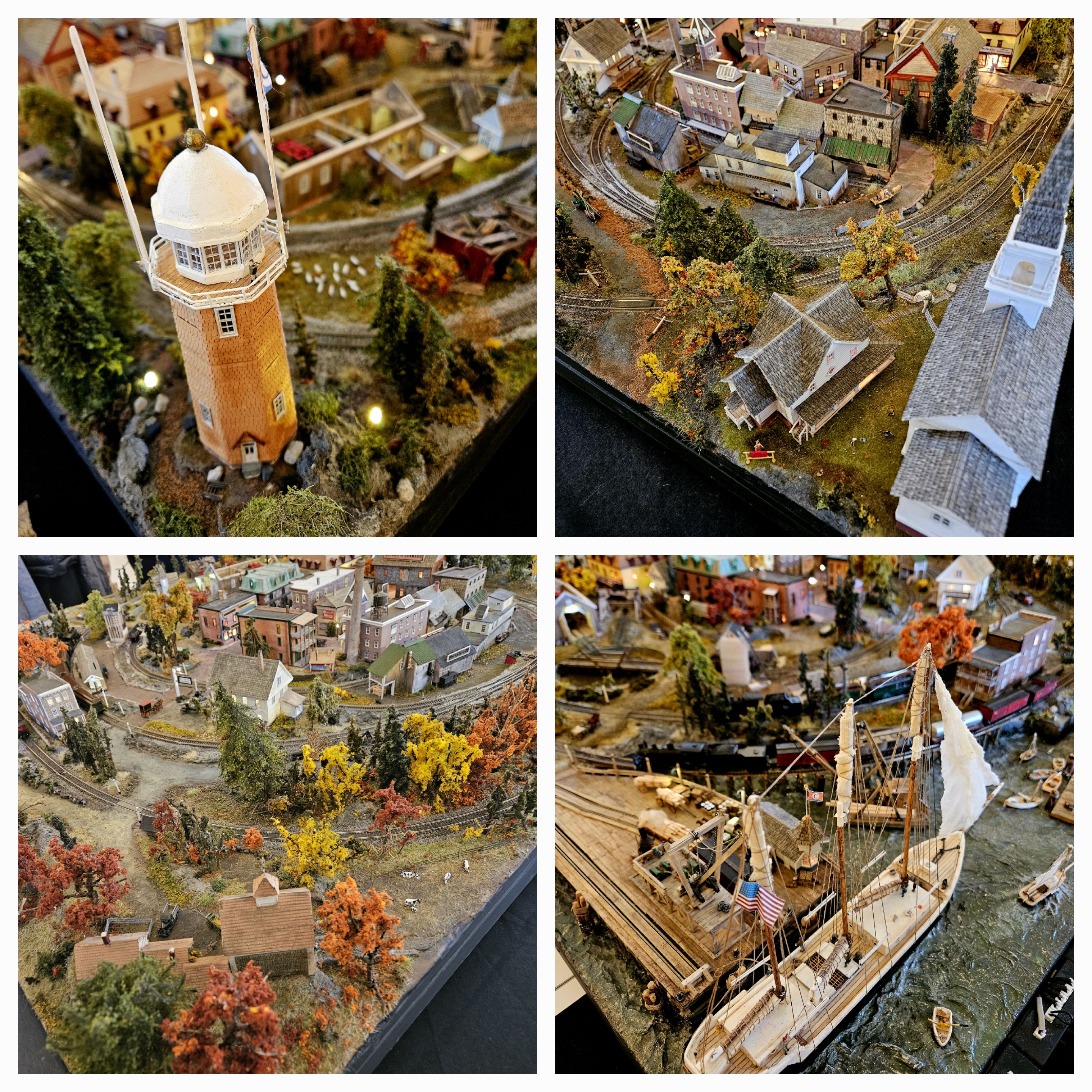
A few weeks ago, I went to a very absorbing art exhibit at Liriodendron Mansion based on the art of Jeffrey Conover. The artist uses his creativity by returning to a passion he had as a child- model building. Conover’s miniature fictional town is named Yelverton. The exhibit tells the story of life in 1900 living in a seaside village which was at the time central to the transportation industry. Boats sail in and out of the harbor, and at the wharf is a boat builder. A lighthouse sits as a beacon of hope and to guide through the storms. Cows graze on the hillside nearby where the creamery sits. There is also a clothier, a trading post, a livery stable and community churches as well as a mansion complete with a billiards room, lit by a Tiffany lamp. The Sheepscot River Valley Railroad runs through the town. Each handmade structure and all of the other embellishments helps one to imagine life in Yelverton. The exhibit invites us to envision what our perfect “Yelverton” would look like.
After reading the artist’s biography, it seems to me modeling building has been Conover’s pathway throughout his life. He’s had an honorable military career, working in intelligence communities and now is helping young people to appreciate wholesome values as a lay youth minister. He is an outstanding and upstanding model himself! For more photos and information on Conover’s impressive creative project please visit his Facebook page
I’m grateful I took time out to see the Yelverton and Sheepscot Valley Railroad exhibit at Liriodendron Mansion. It transported me to another place and time. Isn’t that what good stories are meant to do?
“Libraries store the energy that fuels the imagination.” ~ Sidney Sheldon
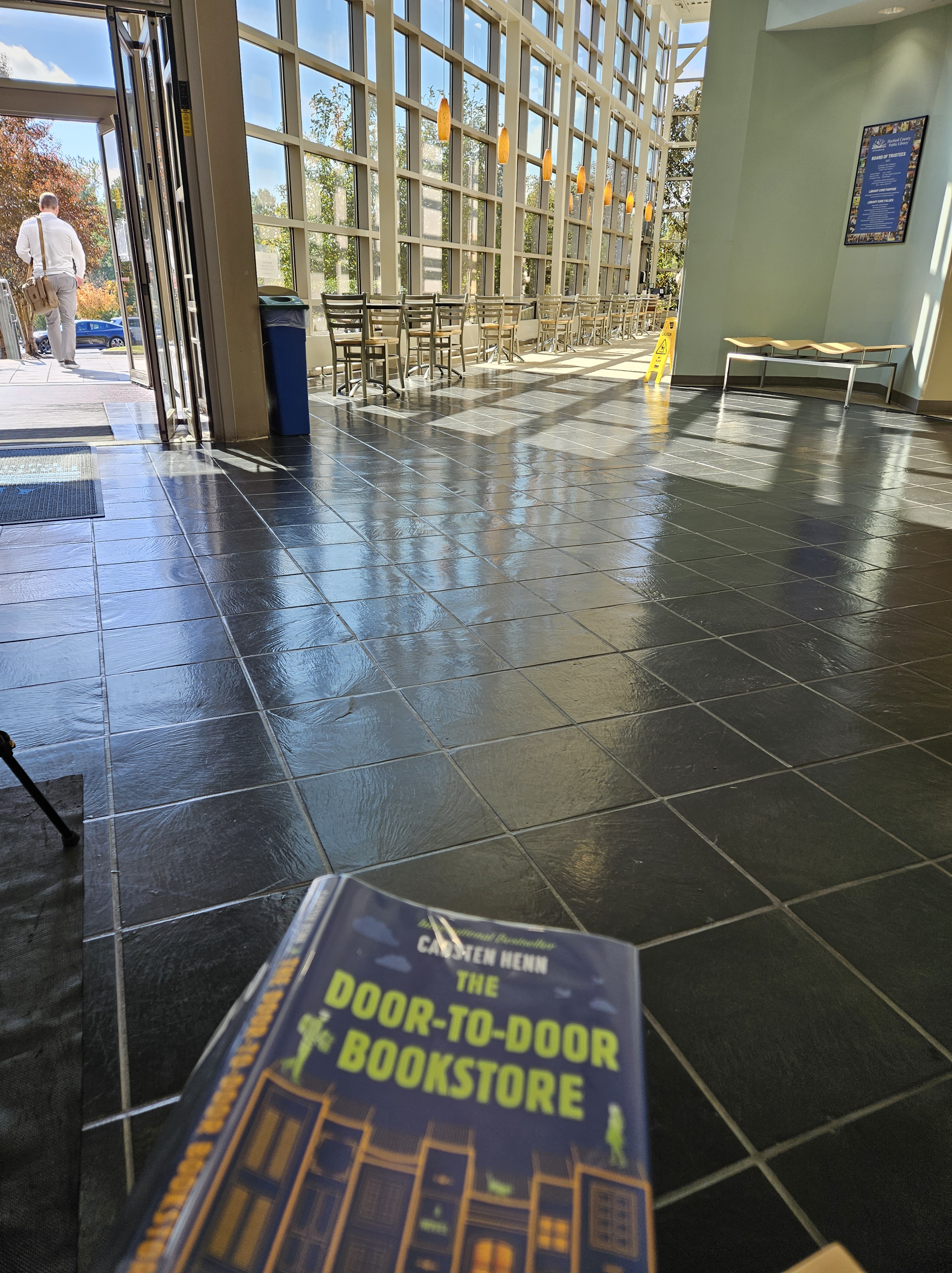
Yesterday in search of a publication, I went to the Abington Branch of the Harford County Public Library where I found my own next perfect story for All Things Fulfilling.
Here is the preface: “Literary Artist Meets Visual Artist facing editing challenge. Which lines are significant to the story and which are not?
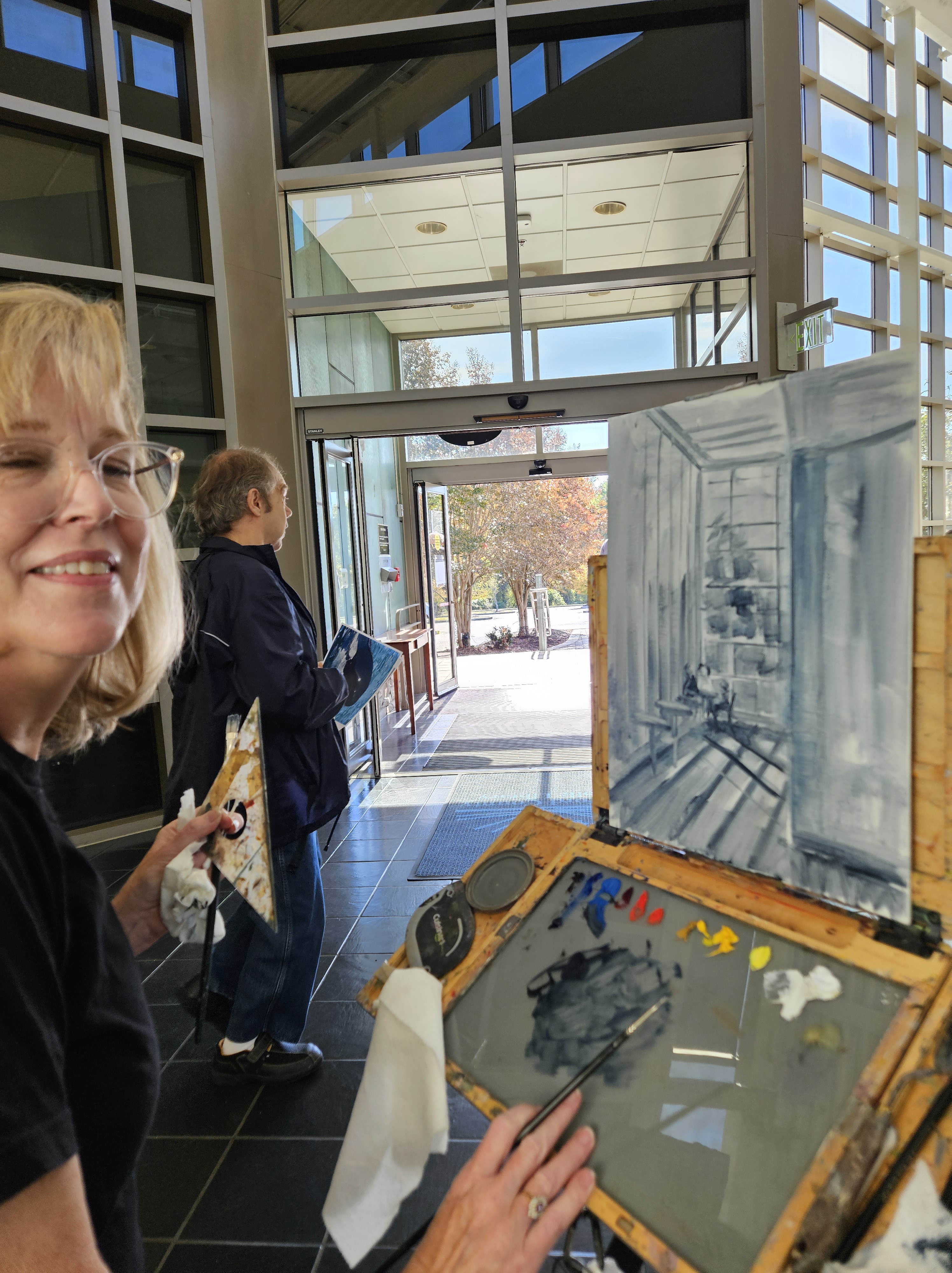
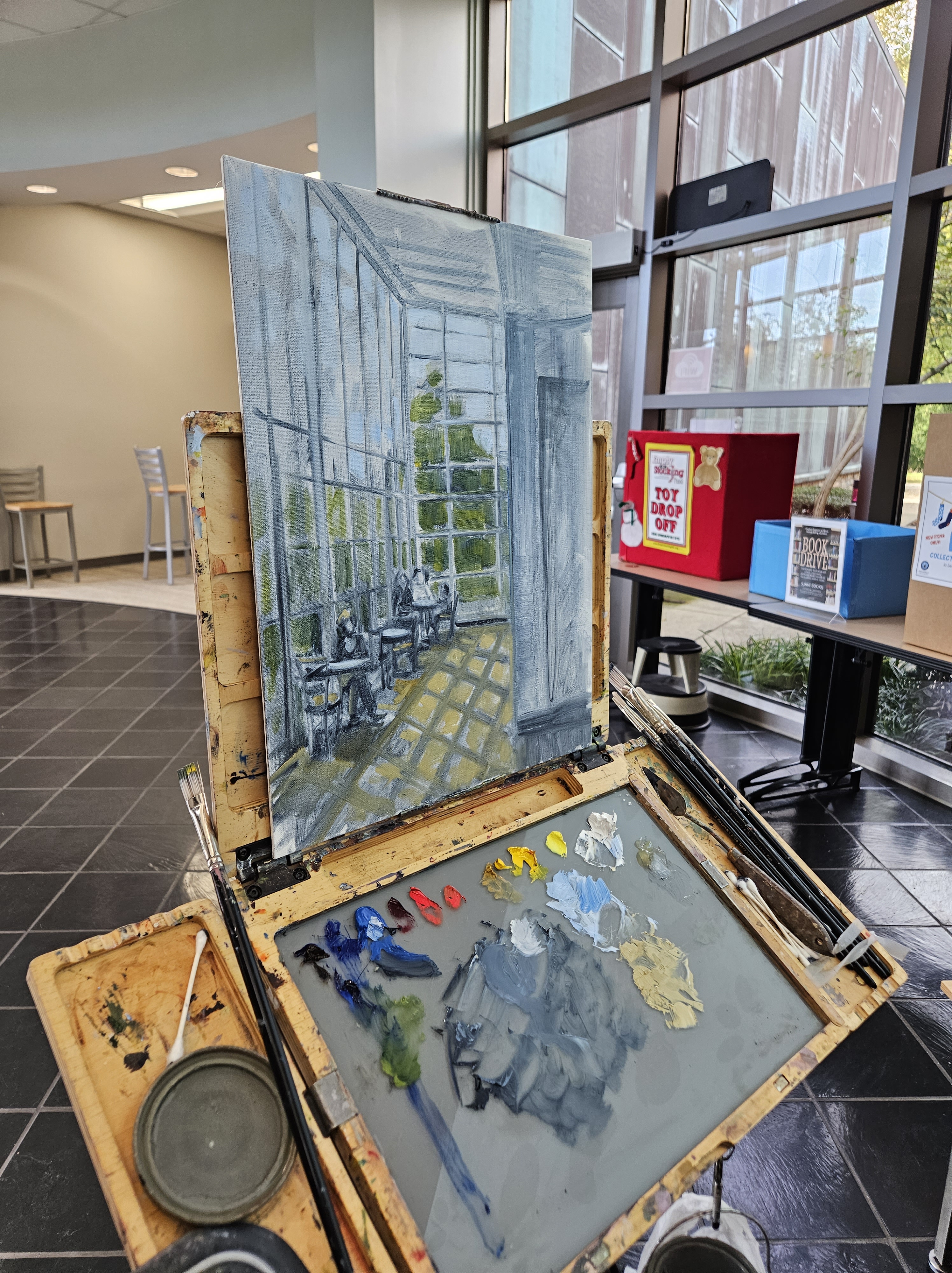
Artist at work – Pamela Wilde. Her interpretation of narrative art uses paint and brush.
Conclusion to the story: Cross-connection between art disciplines fuels creative energy. Inspiration can be found right around the corner.
Note to our followers: Someday you may see the full finished story. It is yet to be determined!
“If you are born with certain convictions, your path, no matter how thorny, is laid out for you and you have to follow, even if your tender feet object.” ~ Fritz Eichenberg – Quaker artist
Two Saturday afternoons ago, I set out for Jerusalem Mill Village in Kingsville, MD. Just as I arrived at the quaint colonial village, the sun broke through. I’d gone to listen to a talk given by Michael Olmert, author and professor, about out-buildings commonly found in colonial villages. Olmert touched on the structures utilitarian value and how they were built.
If you have never been to this beautiful historical settlement, which has none of the busyness of large tourist colonial villages, you are in for a serene retreat. It is located along the Gunpowder River and abuts the lands of Gunpowder State Park. Take a walk on the trails or through the covered bridge. Stop in each of the living history buildings and don’t miss the small art gallery in the Lee Mansion. The general store in the village sells Olmert’s book Kitchen, Smokehouses and Privies: Architecture and Outbuildings of Daily Life in the Eighteen Century in the Mid-Atlantic. His book has been used as a resource for many students of colonial history.
Keep your eye on Historic Jerusalem Mill’s website. There are lectures and other special events throughout the year. Next year, according to Rebecca Weber, Director of the Museum, there will be a series of presentations about how the Quaker values influenced trade and community building in the colonial village. Check the website for the best times to visit because many of the events are on weekends only.
Welcome back to Part 2 of a post about the 2023 Artists in Residence at Ladew Topiary Gardens. If you missed part 1, I’d encourage you to visit the article.
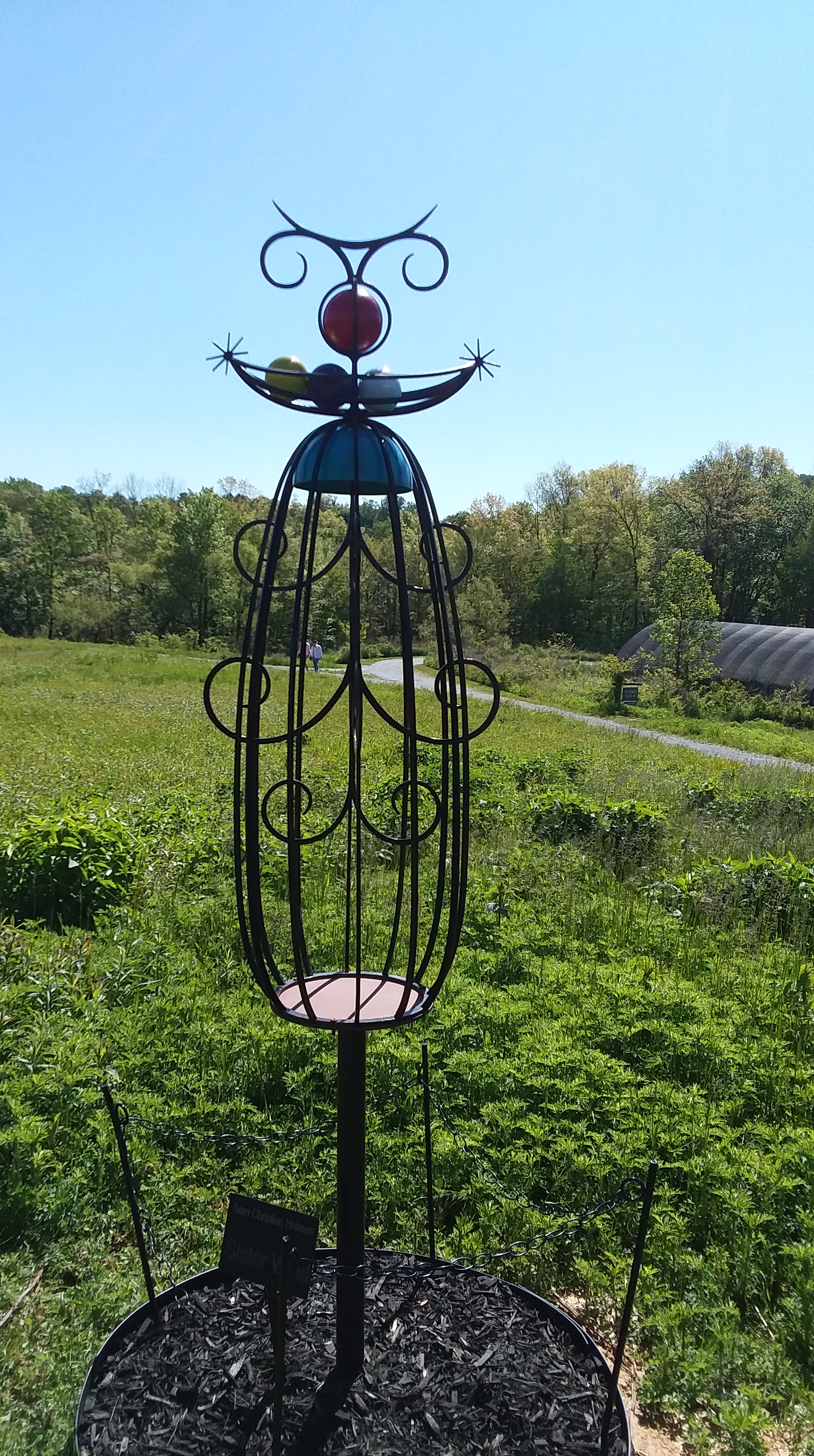
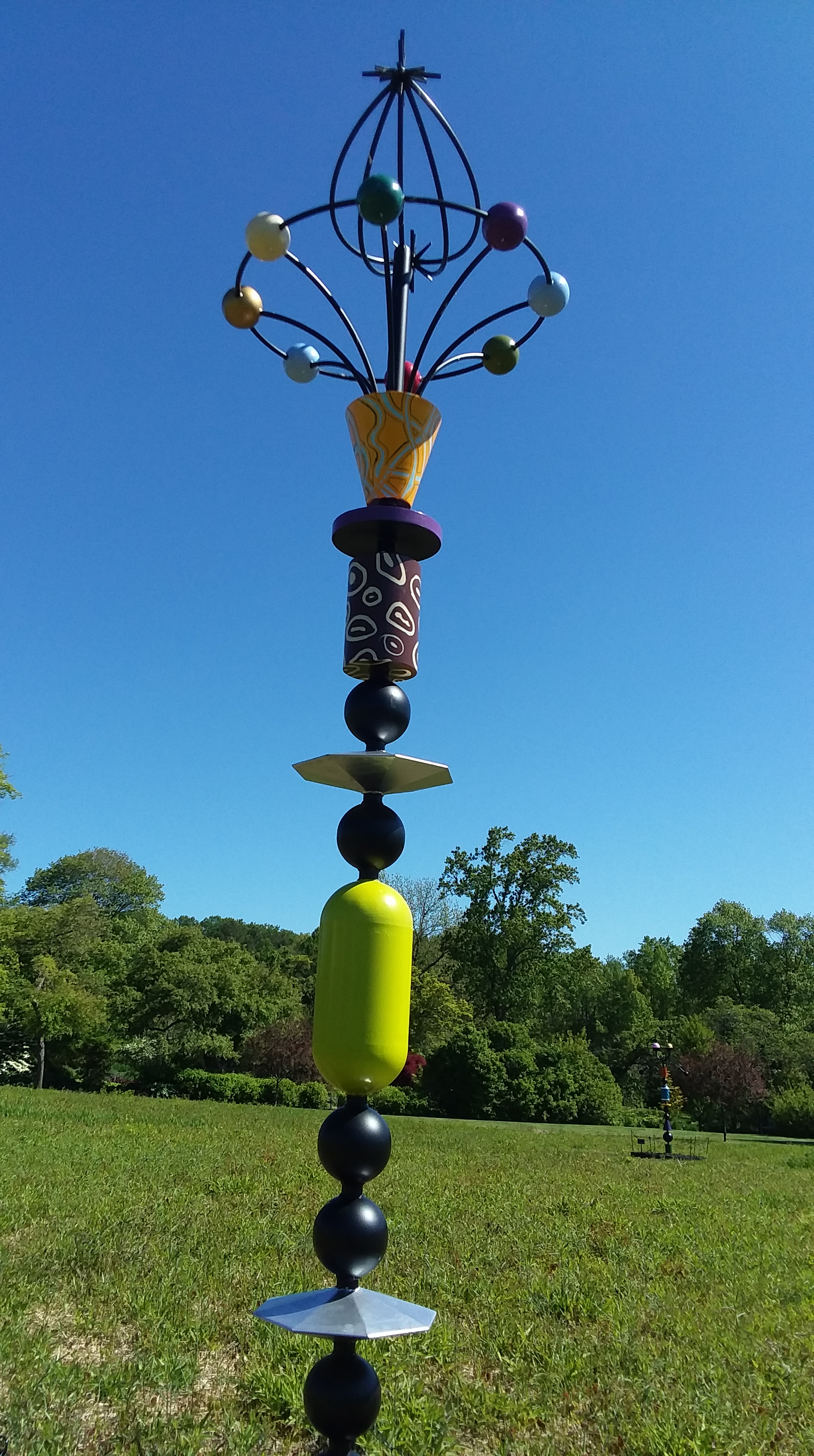
Every year it’s’ interesting to see which artists have been chosen to be featured at Ladew. Along with Quang Ho and Adrienne Stein, Sam Christian Holmes is the third artist for this year. His medium of work in this exhibition are large installations, which he calls “totems.” They are especially visible at this time of year in the wildflower field. As the growing season progresses, and as the closely cropped field begins to prosper with new greenery and blooms, the totems will be seen a little differently later in the season than how they now appear in the landscape.
The artist encourages all who see his sculptures made from metal accented with what looks like oversized-looking beads of assorted color and shapes, to stop and have a conversation with oneself. How do the shapes, colors, cylinders, ellipses seen in the meadow serve as beacons to the cosmos and the spiritual rhythms of ourselves and the Universe?
I encourage you to visit Sam Christian Holmes website where you can learn more about his vision for his art, the various mediums he works with and where he has taught in the community and at institutions of higher learning.
In the Art Barn of Ladew Gardens, there are more paintings from Quang Ho and Adrienne Stein, along with some works of other artists such as Michael Bare, Palden Hamilton, Sam Robinson and Joanne Bare. Do check them out when you visit the gardens of Harvey S Ladew which are said to be one of the “10 incredible topiary gardens around the world.”
Last week I returned to a place where there has been a progression of restoration changes over the past few years. The family who settled in the historic village of Jerusalem Mill in 1771, the Lee’s, would see that the preservation has been done with utmost integrity while upholding all the other Quaker principles and inner convictions they lived by. I am sure for the Friends of Jerusalem Village, who govern the living history museum, there is a lot of grappling with change while staying faithful to values of simplicity and stewardship. To keep the doors open as a living history museum, some change is necessary in order to provide it’s visitors a great experience.
The purpose of my most recent visit was to catch-up on the Lee Mansion, and the extensive work being done on the structure which houses the Lee Gallery. Rebecca Weber, the Director, met me at the door with her corgi. Rebecca, an artist, is ever mindful of preserving the past as she looks out the gallery windows every day and sees the eighteenth-century village structures. Her personal art studio has in it collections of artifacts of vestige – ephemeral things collected in her travels which are unique, rare or disappearing. Rebecca Weber explained how she curated the current exhibition and the placement of the art. In her explanation, it was clear that she cares deeply about the art she will be seeking for future shows and how it important it is to chose just the right art for this historical village’s mission “to keep alive the heritage and traditions that form common bonds and deepest roots.”
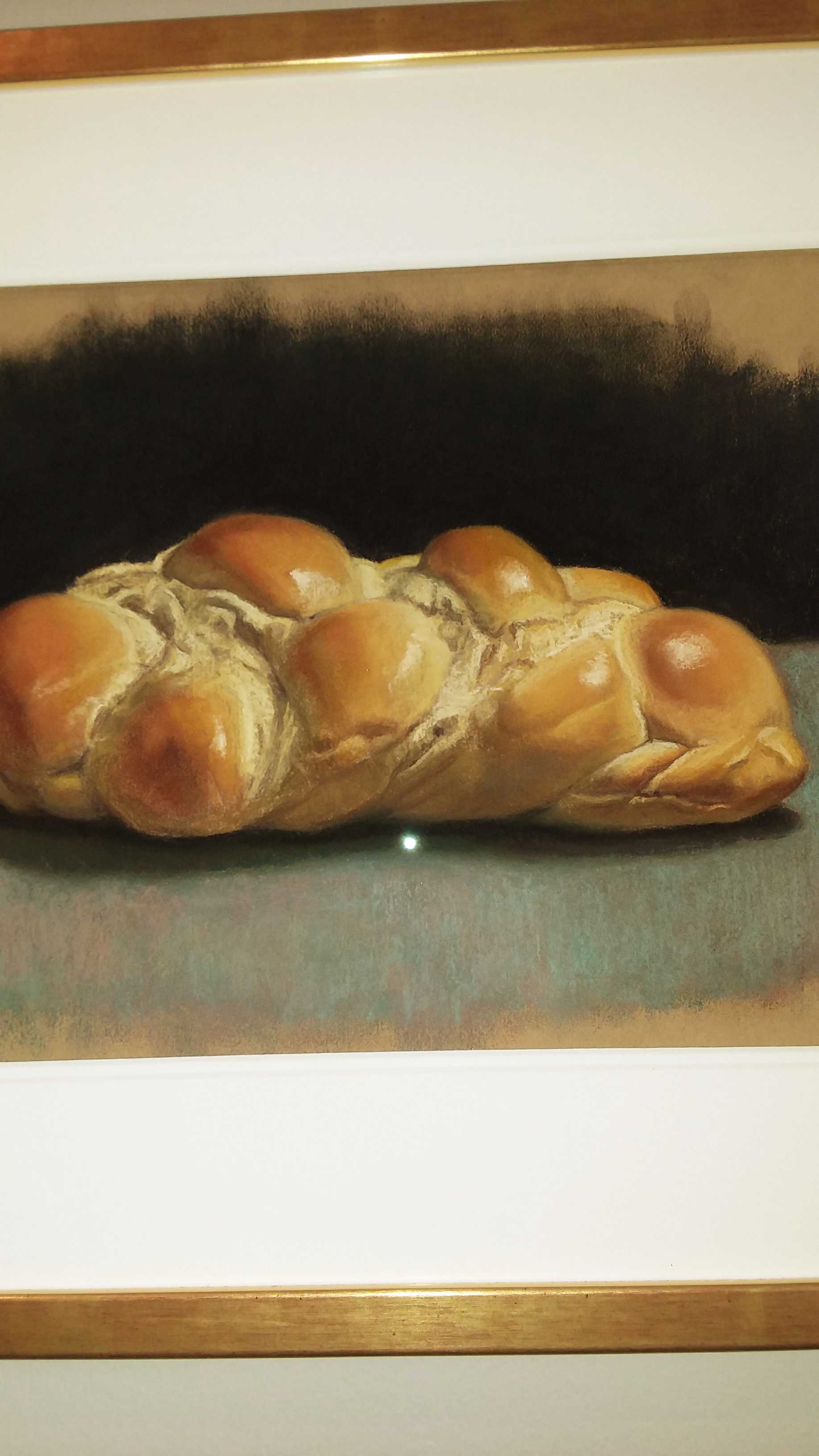
The exhibit currently hanging in the Lee Gallery is the art of Ephraim Rubenstein. Words about his illustrious career are so many it is best read on his website to get a full-picture of who he is as an artist and his impressive accomplishments. So today, I’d like to share a bit of his art through images. These paintings are exhibited at the Lee Gallery.
Ephraim Rubenstein’s “Bread” collection, which are pastel paintings on sanded board, are perfect fits for this living history museum because the grist mill fed all the village people back in the 1700s. These paintings are only a few of the exhibit, and the art is best appreciated first hand. As you will see from the text below the pictures, there is a brand new reason to visit.
Ephraim Rubenstein from his “Bread” Collection
Artist – Ephraim Rubenstein from his “Bread” Collection
Artist: Ephraim Rubenstein from his “Bread” Collection
If you would like to know more about Jerusalem Mill, you can go to a past post Time Well Spent here. Information about the museum’s history and events is also available on the Museum website.Jerusalem Mill was recently awarded a Best of Harford County Museum designation. It is also listed in the National Register of Historic Places.
Thank you to Rebecca Weber for your graciousness in allowing me sit and absorb the art around me and leaf through the wealth of magazine articles and other media information about the artist, Ephraim Rubenstein. His work stylistically resembles many of the old world masters paintings which I favor.
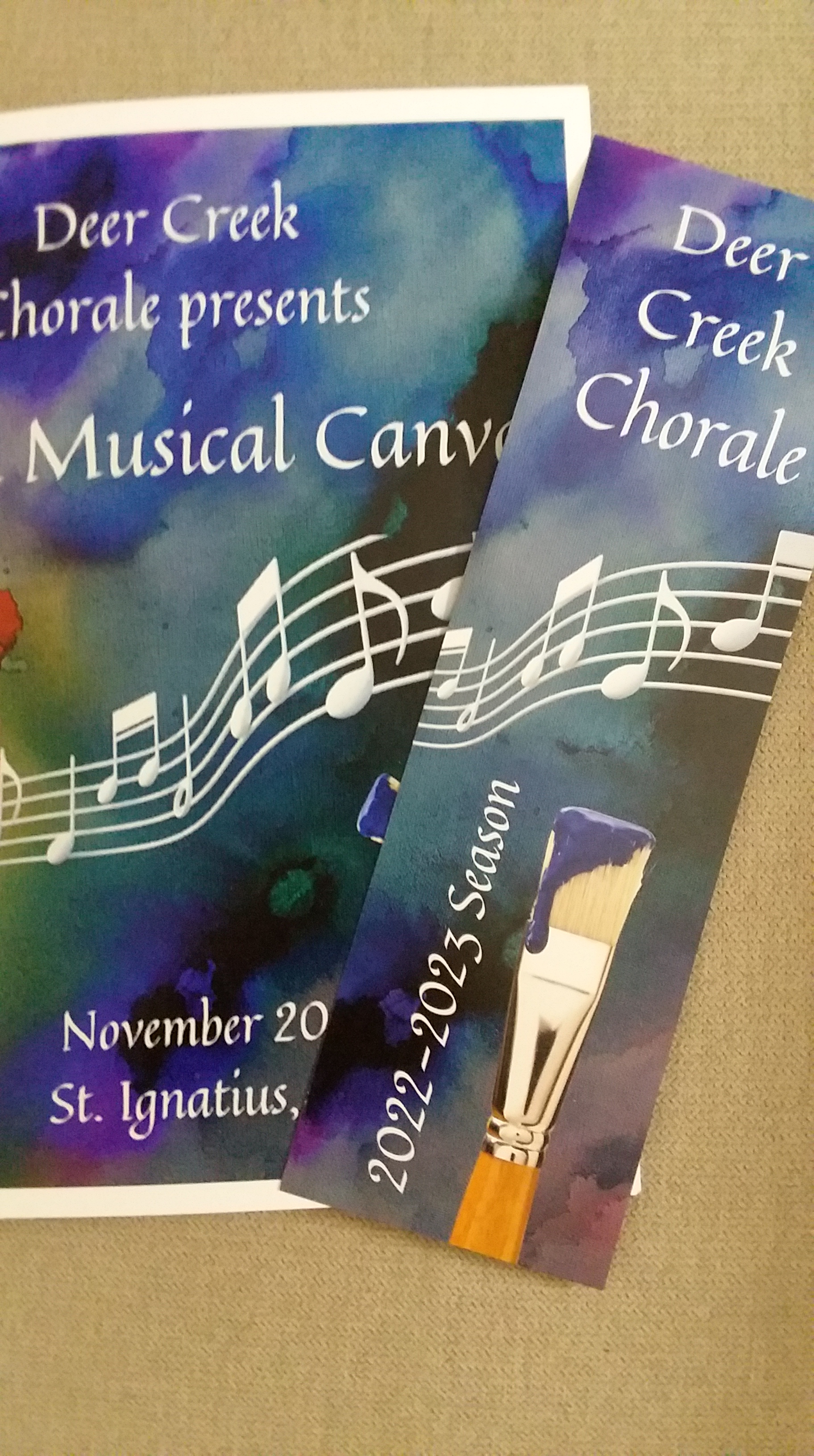
A beautiful venue always adds to the experience when art of any kind is on display. St. Ignatius Church in Hickory, MD did not disappoint. It was where The Deer Creek Chorale, a multi-generational choral group exhibited their vocal talents late last Sunday afternoon. The singers, comprised of more than eighty members, from Baltimore and Harford County as well as a few voices from southern Pennsylvania have entertained not only in Maryland but at The Forbidden City Concert Hall in Bejing and Carnegie Hall and other impressive venues.
The non-profit organization is under the direction of Martha Banghart and her artistic staff which includes Julie Culotta, who founded the Deer Creek Youth Group nearly seven years ago. Now, youngsters age fifteen and over can have their interests and talents in the musical arts nurtured through the multi-aged group. As the audience “walked the rainbow trail” with the youth singers, lyrics encouraged others to be colorful, be bold and powerful, but most of all BE YOU! The youngsters are not just walking the walk, they are talking the talk as they learn by doing and being involved with what strikes their passions, choral singing.
The music of the evening brought a broad spectrum of compositions, many of which had colors in their titles such as Bein’ Green and Orange Colored Sky, sung by the youth. Deep Purple and A Red, Red Rose, True Colors and The Blue Ridge were a only a few sung by the adults. There were a few lively songs, but never riotous, such as Build Me Up Buttercup and a Big Yellow Taxi, sung by The Lady’s Six +1.
Susan Zantop, who is also a member of Deer Creek Chorale and Cultural Events Coordinator for the Maryland Center for the Arts, did a fine job of narrating which brought context to the music and how it tied into the visual arts portion of the program. Two award-winning artists, Joan Hodous and Bill Rothenbach presented their two paintings for silent auction, a oil and acrylic on canvas, respectively. The painters also provided commentary on their vision of what they brought to the canvas. Joan Hodous’ landscape was of Blue Ridge Mountains in the background flowing down to a hilly pastoral scene in the foreground. The colors on the canvas were subdued autumn hues. On the contrary, Bill Rothenbach who is a painter of abstract impressionism, his painting looked like a clash of fireworks of red, white and blue, which was a foretelling of what was to come next in the program – a patriotic melody of tunes. I was particularly struck by the masterful selection of voices which at one point sounded like fifes playing in the background of a 4th of July parade.
My impressions of “The Musical Canvas” were many but they can be summed up in just a few more words, “the concert was a wonderful respite before the busy winter holiday season sets in.”
As if the evening was not enough, when I walked out into the blustery air, the bells of the church pealed out “Amazing Grace” and it was indeed, a beautiful ending to Sunday performance of a fabulous community chorus, The Deer Creek Chorale. Thank you to the Maryland State Arts Council and the Harford County Cultural Arts Board for making the evening possible through their generous grants.
“Mingle at the Mill” included food, drink, music, sales of HSBC publications and an informative talk about the historic preservation work that has been involved in turning the pre-revolutionary grist mill into a fabulous art gallery. The current fine art exhibit on display “Harvest” at the Manor Mill Gallery is from artists Minas Konsolas, Jimmy Rouse, Finch Turner, Kim Weiland and Bo Willse paintings.
(Note: If you are interested in any of the artwork, please contact Lynne Jones at the Manor Mill Gallery, Monkton, MD)
As I visited with various individuals at the event, I became keenly aware the appreciation of history is not a lost art, and there were many people with great knowledge of the upper Baltimore County’s strong, rooted in history heritage. I listened with great interest to the owner of the property talk about the steps involved in bringing the mill to it’s current state. The work is not yet done! I was so happy to hear getting the waterwheel functioning again is in the plan. It will be so important from an educational standpoint. As it’s been said “Tell me, I forget; show me, I remember; involve me, I understand.”
Historical societies are challenged to find new ways of keeping the past alive in to this modern day world. Historical preservation work going on all over the country helps to facilitate a better understanding of times past or “back in the time of our country’s early founding and building.” For people, especially students, who find reading history books tedious or grueling, experiential learning is probably the best solution.
The Manor Mill Gallery is a place of ideas where art and history have come together. The selection of The Manor Mill Gallery was a fitting choice of a venue to host a historical society gathering because many of those who are interested in history also have an appreciation for art. In this writer’s opinion, the more we can gather all fields of the humanities together, the more people will understand the term “the humanities” which tends to be a puzzler or a head-scratcher as to what the term really means. The Maryland Humanities Council’s definition well explains it. Here is their mission statement.
The Manor Mill Gallery in Monkton, Maryland is a place that I am ever so happy to return. Seeing the progress that has been made is impressive. Much has been done since I was last there on Easter weekend. The ell off the main structure whose historical integrity has been altered as little as possible has been converted into workshop/office space, “the loft,” and restrooms. Of course they’ve had to accommodate for heat, electricity and running water to make it a public place.
Those at the helm of the project, Gallery Manager Lynne Jones and the owner, their hearts and souls are really in it and it shows. For more information on this historic grist mill, and the historic Monkton Hotel, please visit their respective websites.
Thank you to Scott Batton of Batton Builders for inviting me to the event. I would not liked to have missed it. And as you can see, a builder involved with historical homes and structure preservation does not want to miss anything either. Scott inspected the property from the foundation up to the third story above ground, where the loft is, pondering every bit of it.
The cellar, in itself, tells a foundational story.
In some of the cellar, one must be as only as big as a basement troll to enter into the spaces.
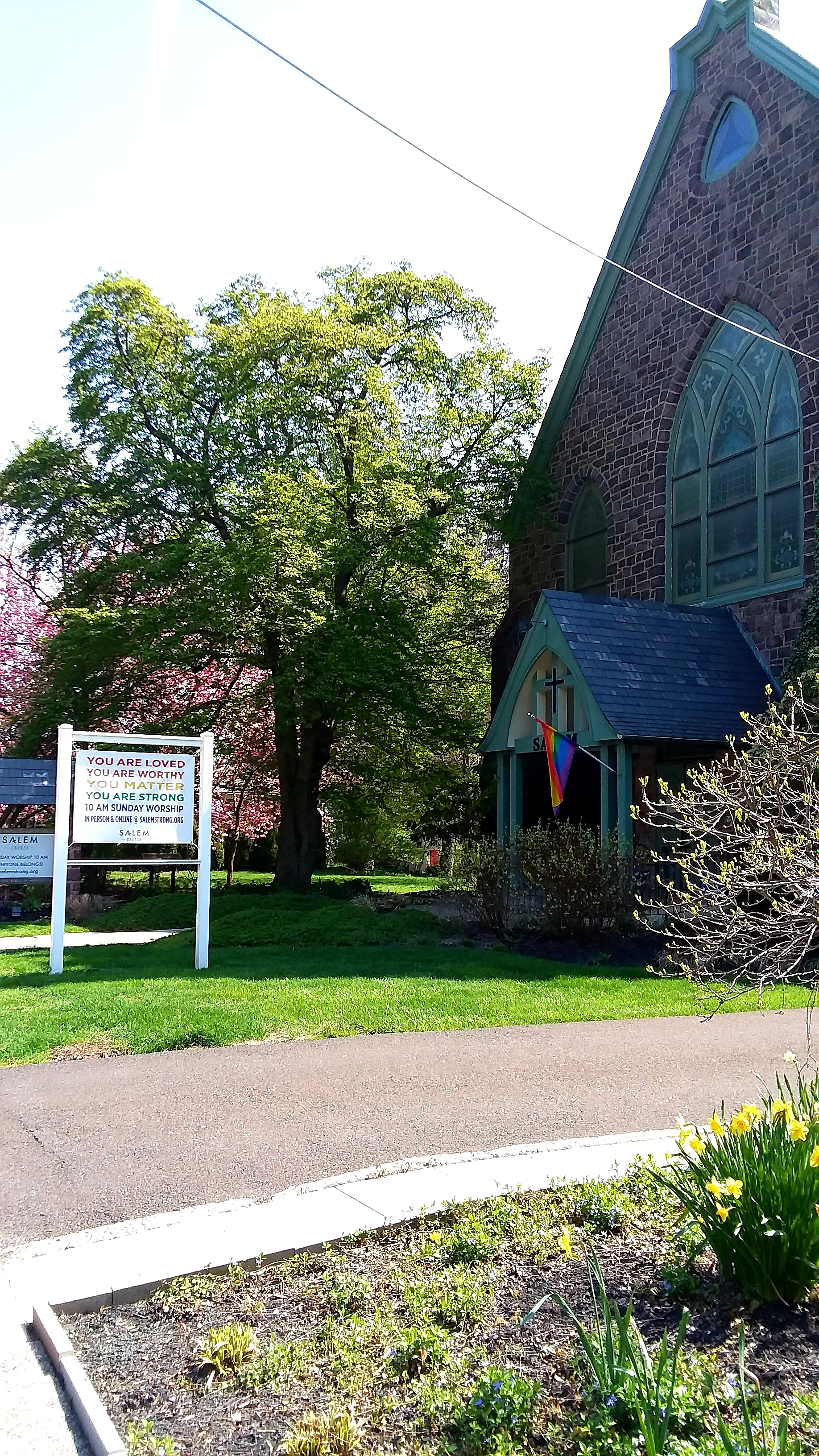
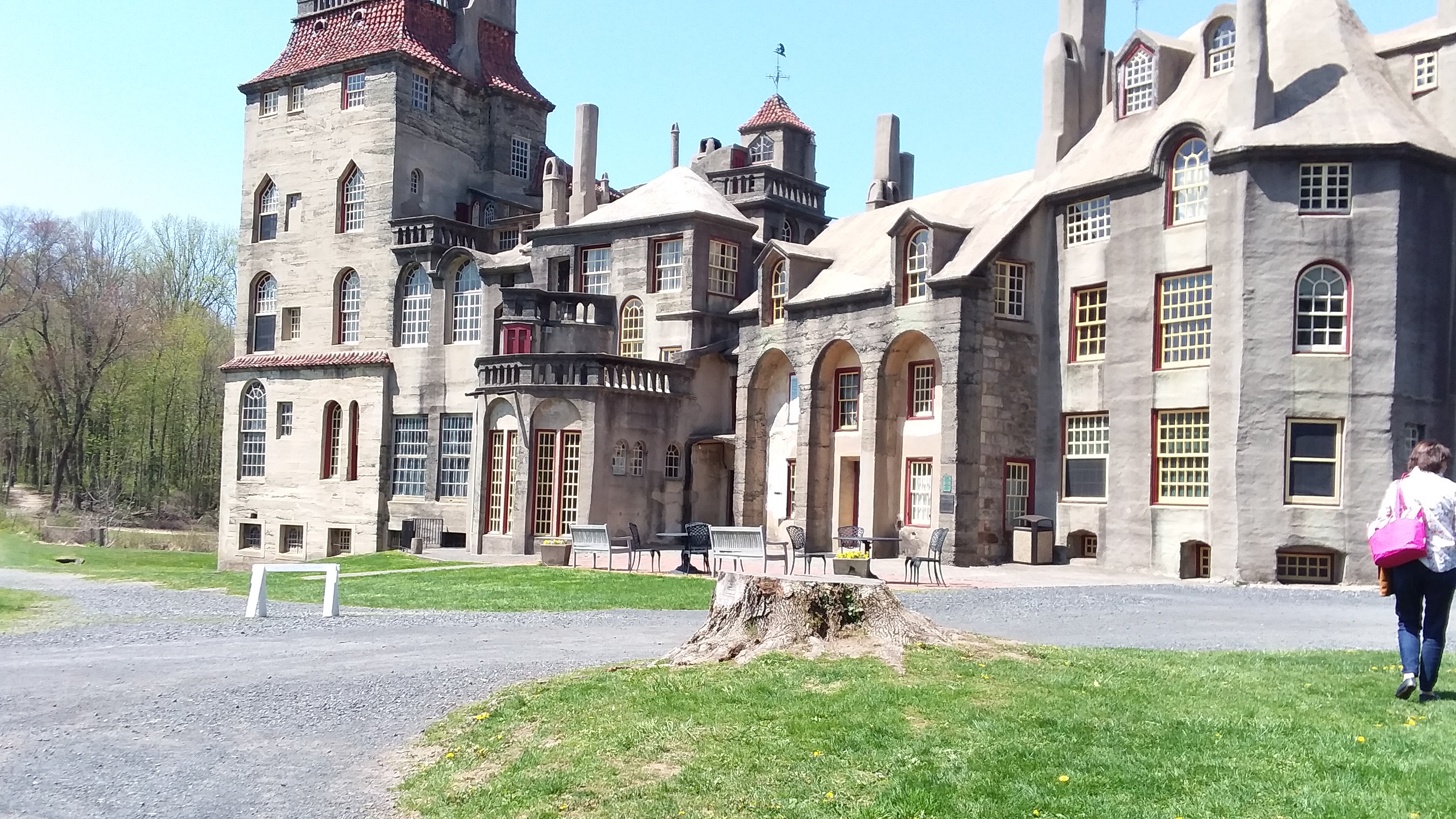
Cultural Travels without visiting at least one church in a town filled with notable history is like leaving an area unsatisfied or not completely fulfilled. We passed by this beauty, Salem United Church of Christ, on our way to Henry Chapman Mercer‘s home, Fonthill Castle and to the Moravian Pottery and Tileworks, a place on the National Historic Register where Chapman made a good deal of his bread and butter during the Arts and Crafts Movement. Inside the church is the tilework of the man of whom our focus is on.
The Bible in Mercer’s Tile “The Baptism of Jesus”
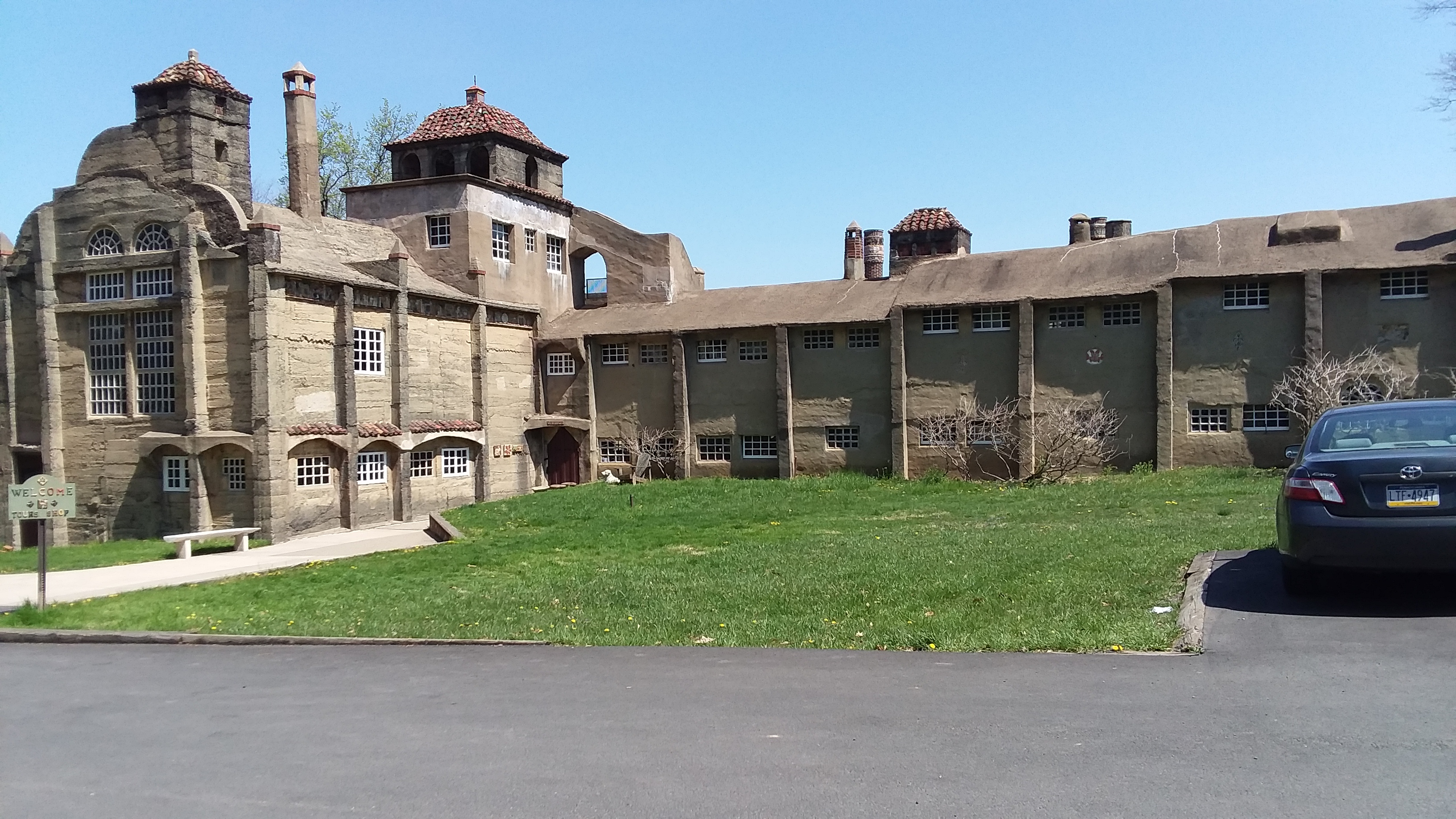
Quite unexpected was the Spanish Mission Revival architecture of Mercer’s Moravian Pottery and Tileworks which was built to “master the potter’s art and establish pottery under personal control.” The working history museum lies adjacent to Mercer’s home – another enormous castle named Fonthill.
Moravian Pottery and Tileworks, Doylestown PA
Vase – Moravian Pottery
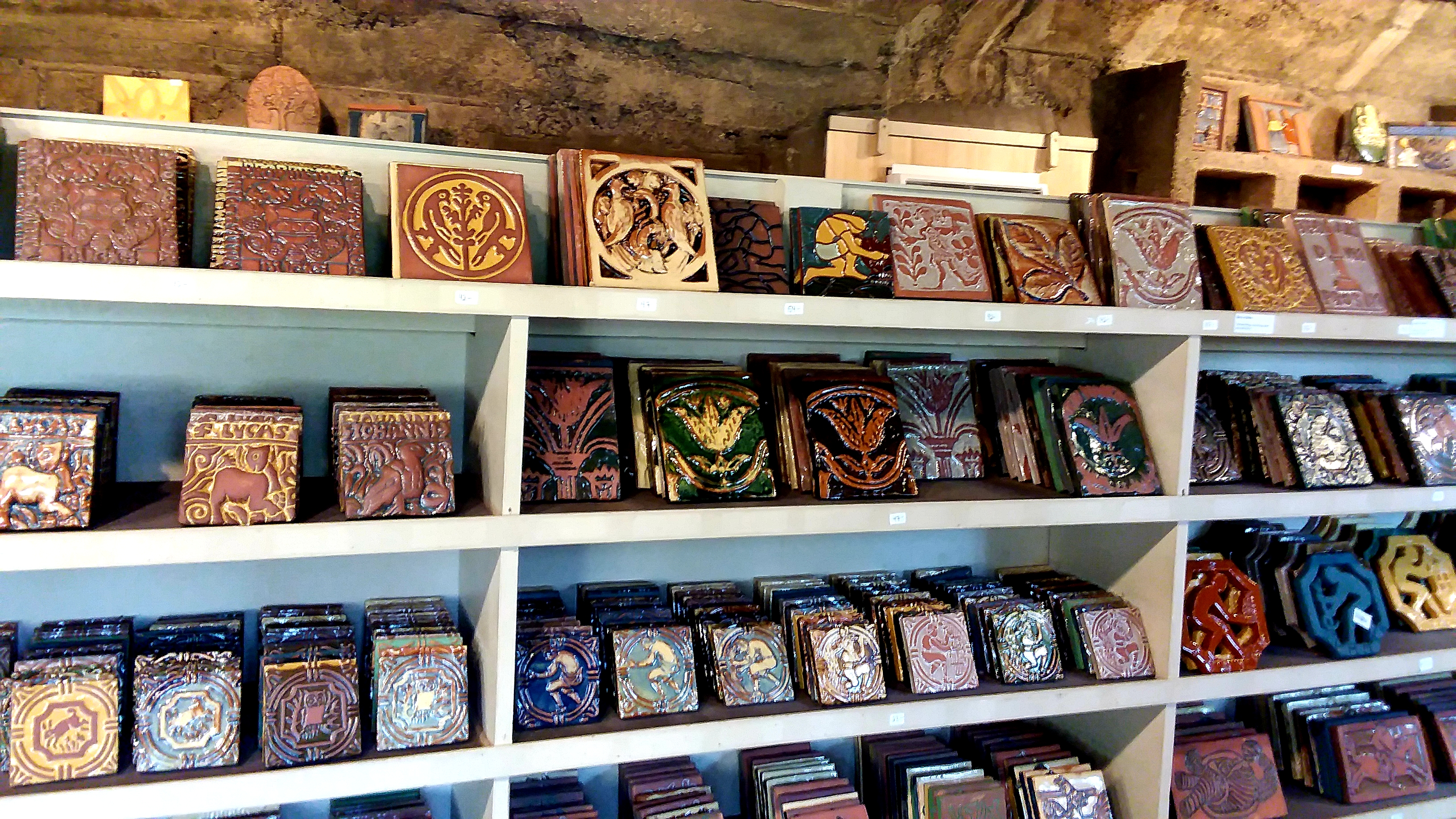
Moravian Tiles of Henry Chapman Mercer from the Arts and Crafts Movement EraHenry Chapman Mercer’s home
Our visits to Mercer Castle, Fonthill Castle and Mercer’s Moravian Pottery and Tilework led me to ponder the enormous amount of energy and brainpower it took Henry Chapman Mercer to conceive his vision for all three structures and bring them forth. Fortunate that he bequeathed it all for public enjoyment of future generations and for those who like to learn and have cultural experiences in their lifetimes.
My hunger for more cultural sites from Bucks County, PA had not quite been satisfied nor had my sister’s. We each had one more place we wanted to visit before leaving the area.
Come on back on May 3rd for the final post in this three part series. If you hunger for more art and culture from your armchair, we believe we’ll have something more you’ll enjoy from AllThingsFulfilling.com.













 All Things Fulfilling